

Loading...
Postulate is the best way to take and share notes for classes, research, and other learning.
A Better GDP Formula
 Laura Gao
Meet GDP.
What are you, GDP?
Gross domestic product is the total value of goods produced and services provided in a country during one year. That's too complicated. Here's the short version - TL;DR: GDP = production.
What are you made of, GDP?
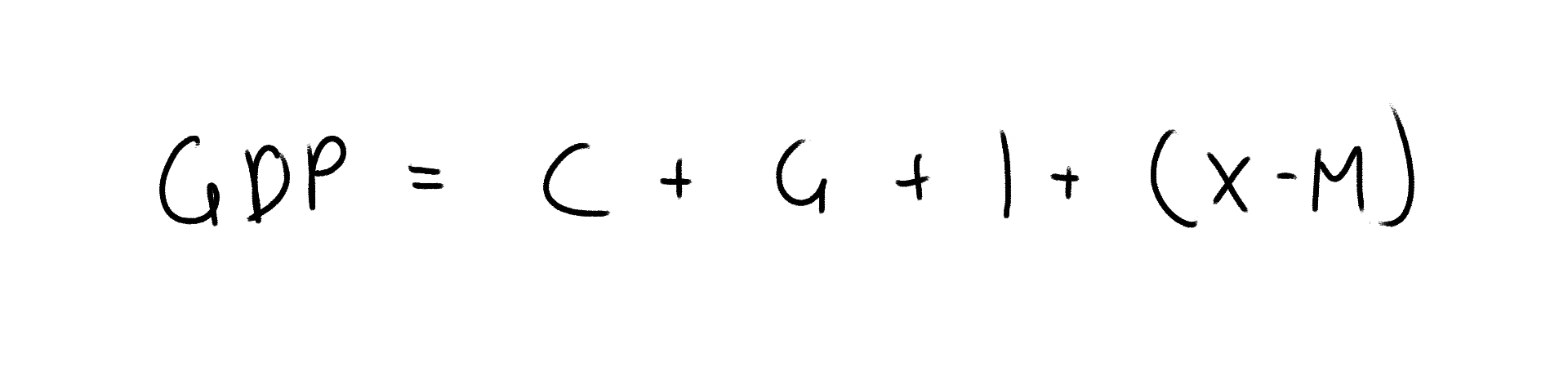
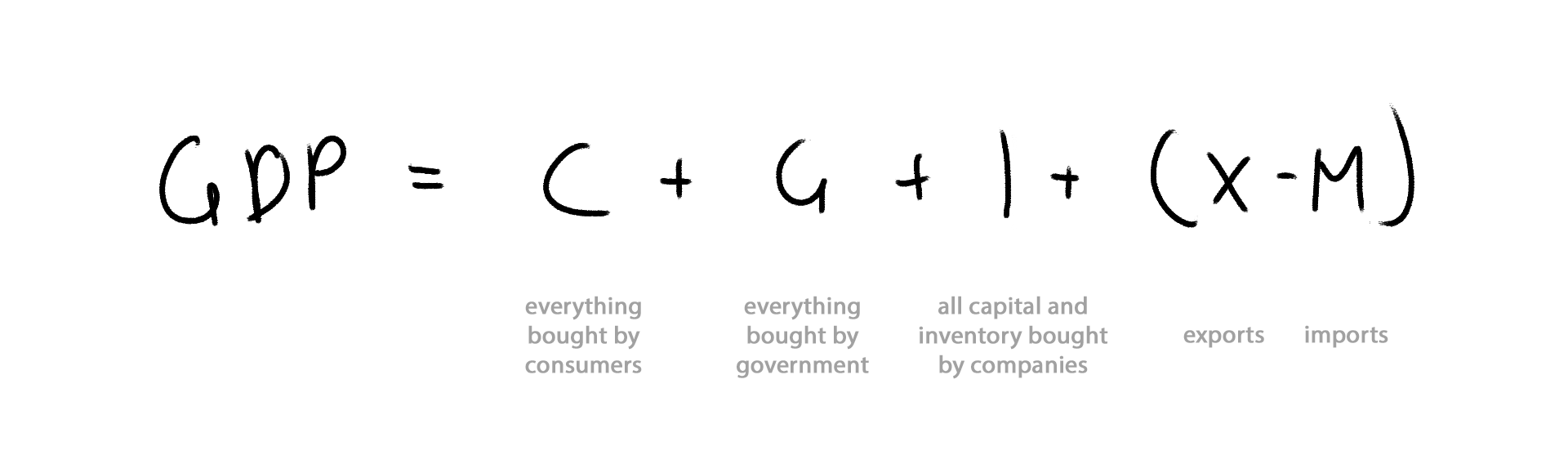
Oh, that's how they talk about you in public schools, right? For those of you who haven't been through high school economics (lucky you), here's what each of these letters mean. And no, it's not that CGI. Don't expect econ class to be that interesting.
Whatever. The exact terms don't matter much. Basically, all you need to know is that public schools talk about our friend GDP like she is what USA spends minus net exports.
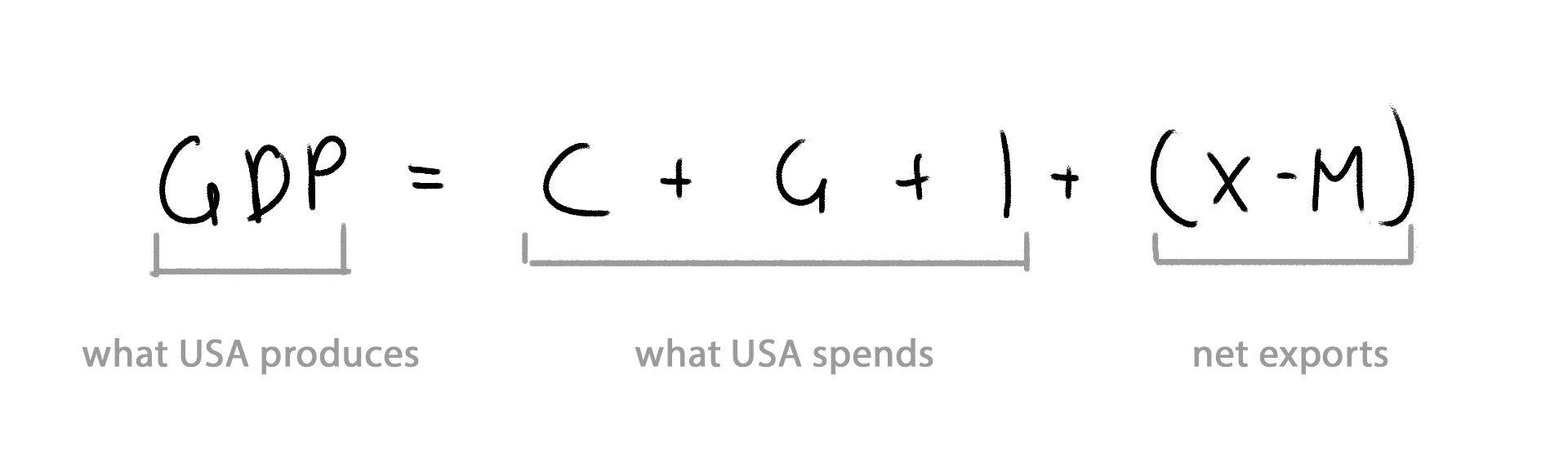
I don't know about you, but this doesn't make sense to me. Forget the equation, just read this out loud:
What USA produces = what USA spends - net exports
Or,
What USA produces = what USA spends + what USA sells to other countries - what USA buys from other countries
I understand the first 2 terms, but how the helicopters does net exports play in? I get that in order to measure how much USA produces, we want to add up all the channels where the goods can be sold, from what Americans buy (C + G + I) and what foreigners buy (exports). But why would you subtract imports from exports? Why does what the US buys from other countries matter when GDP is dealing with how much the United States produces?
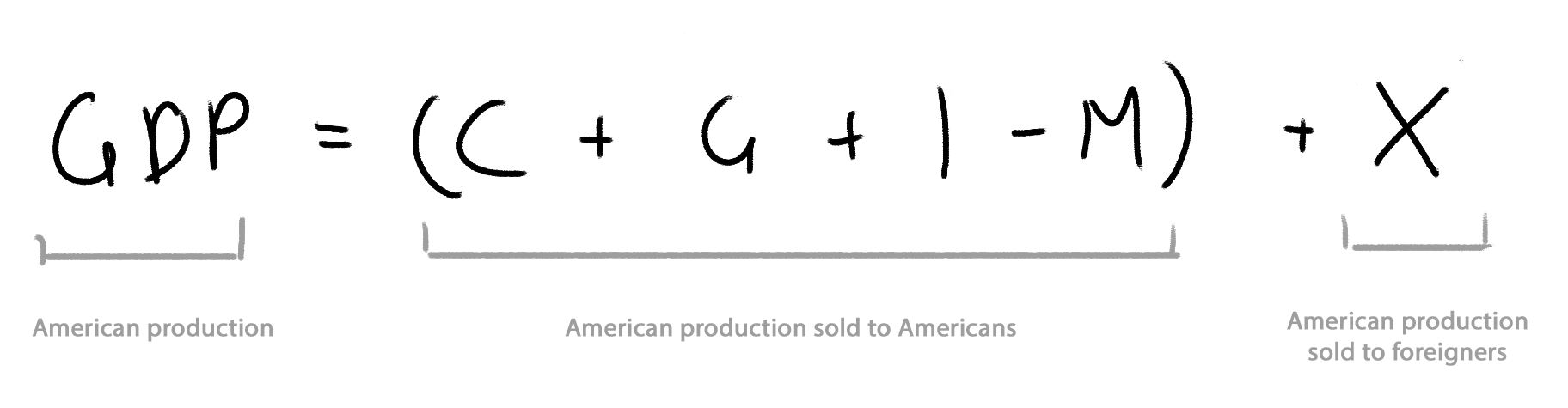
One year later, I found the answer. I understood everything after rewriting the equation like this:
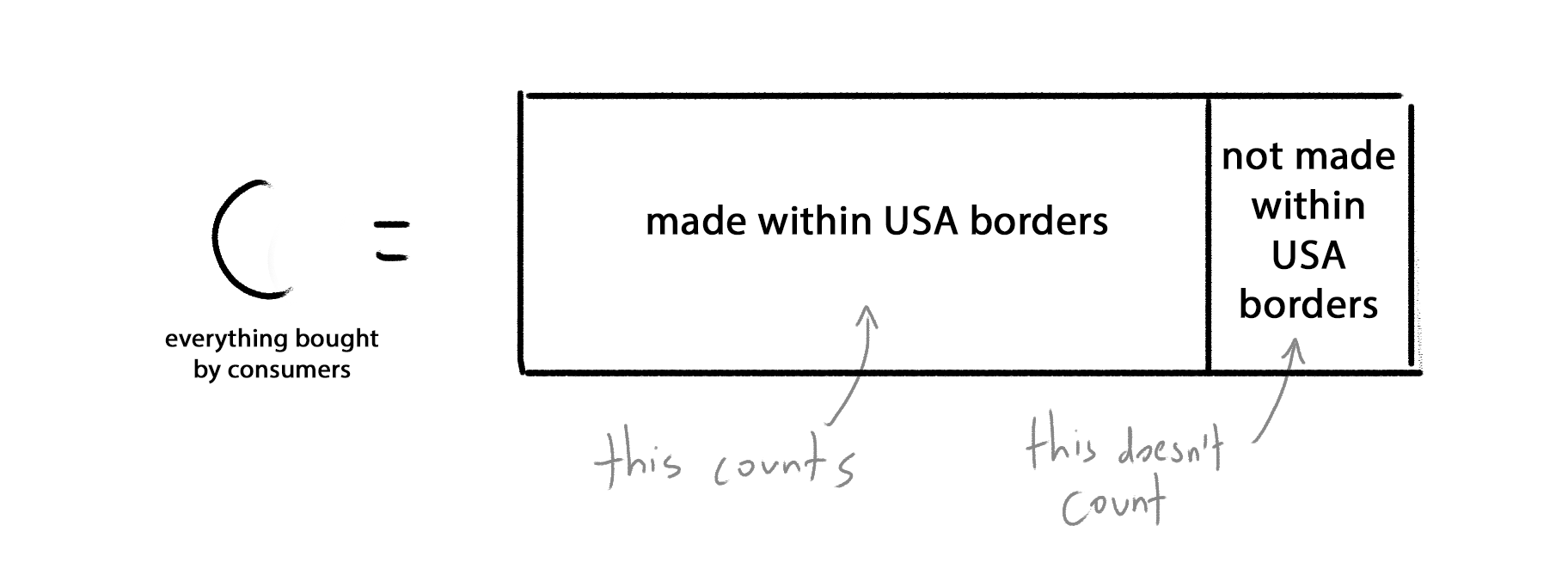
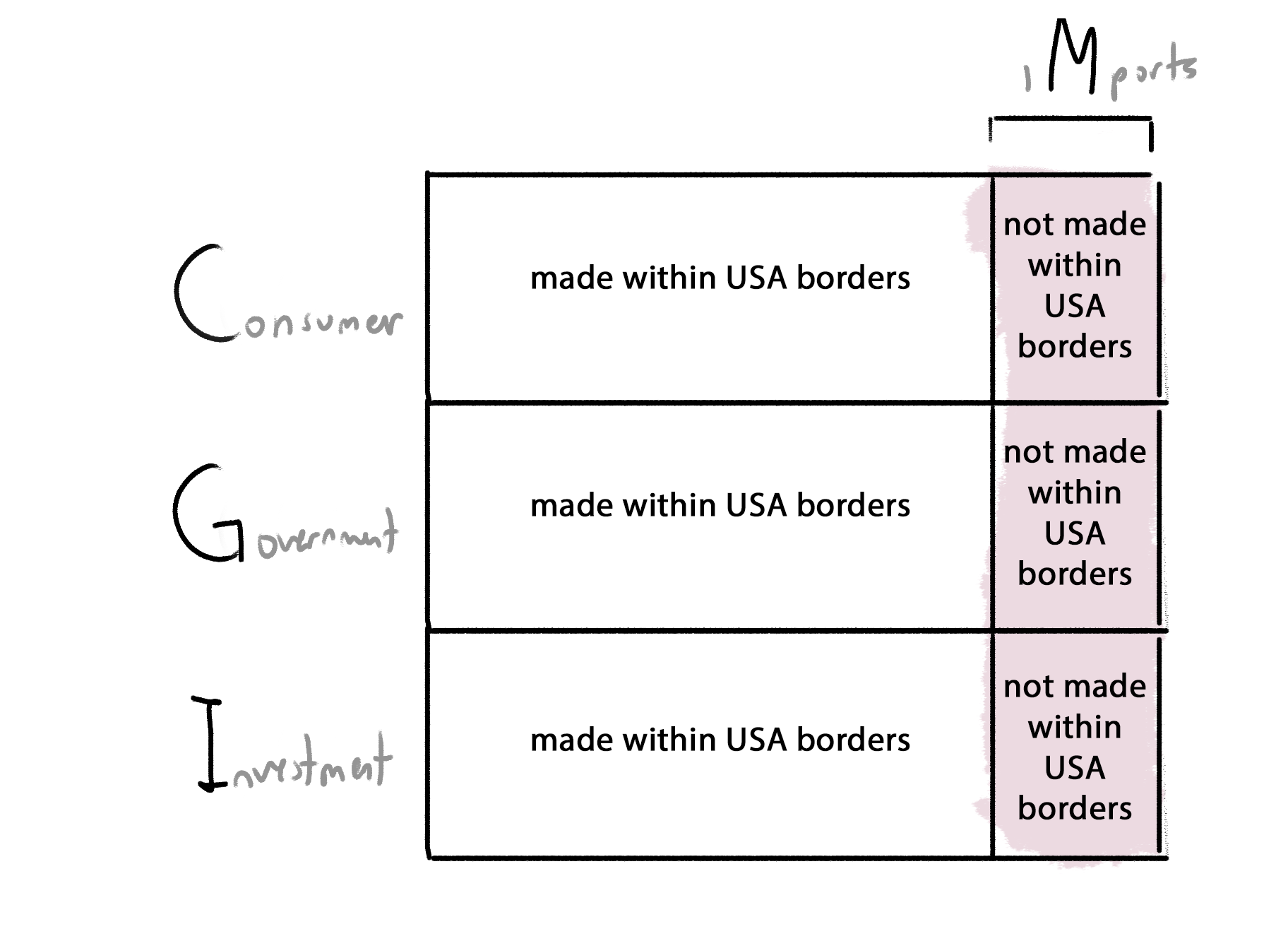
Out of all goods and services that American consumers buy, some are produced by the US while others are imported.
Same with the other two.
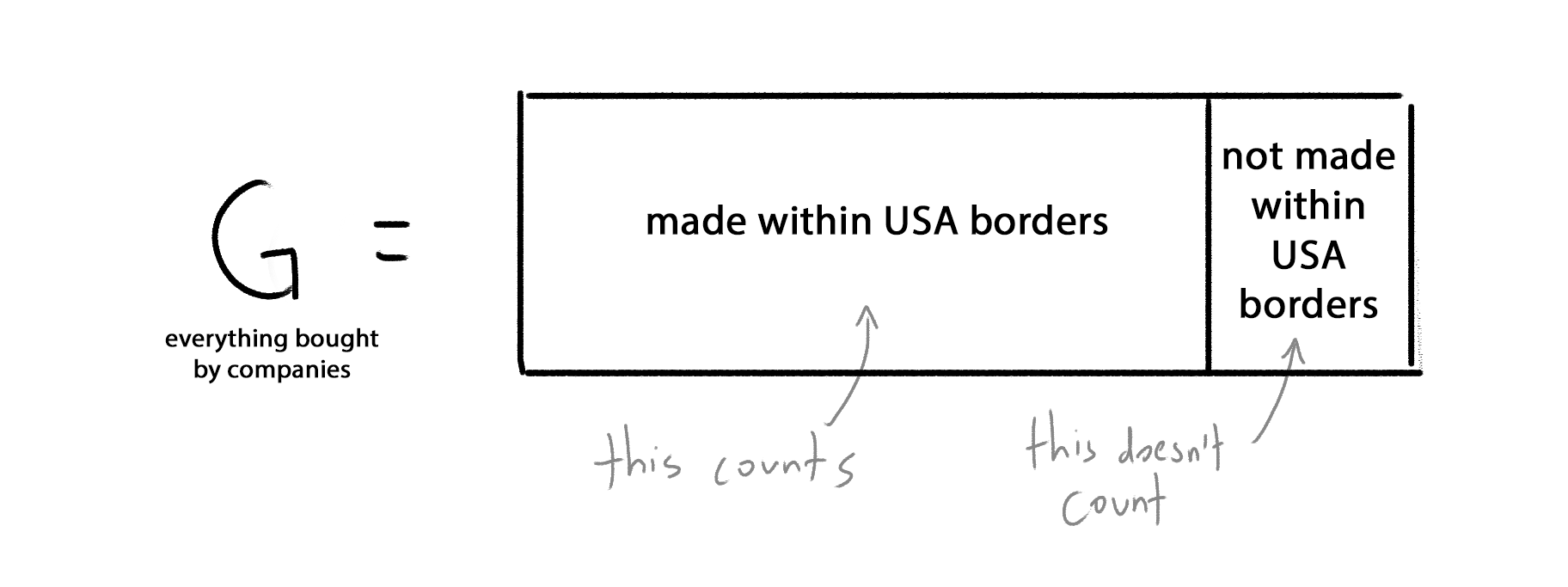
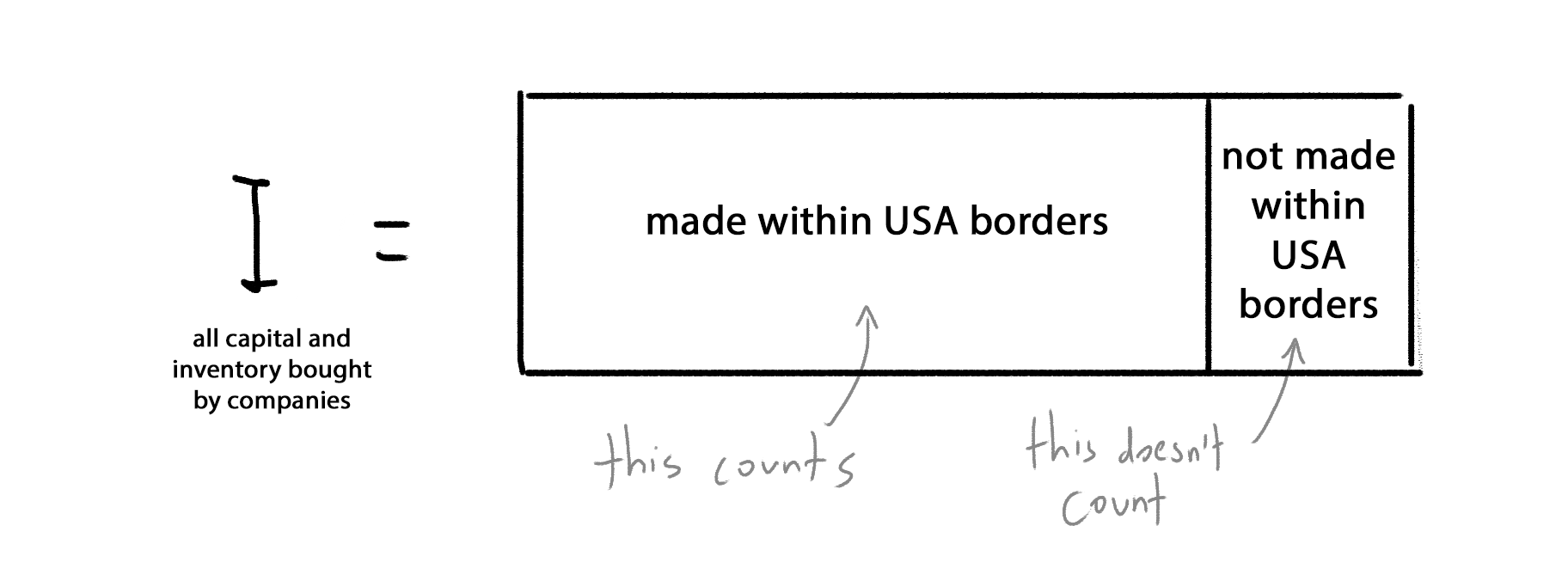
Combined, these "not made within USA borders" sections make up all imports.
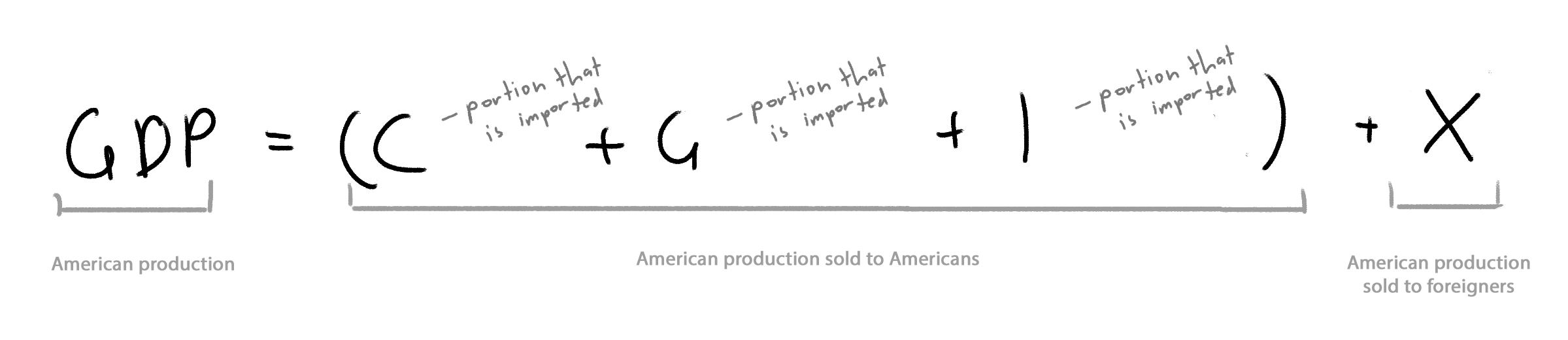
So, actually, to be more correct, we can write our GDP equation like this:
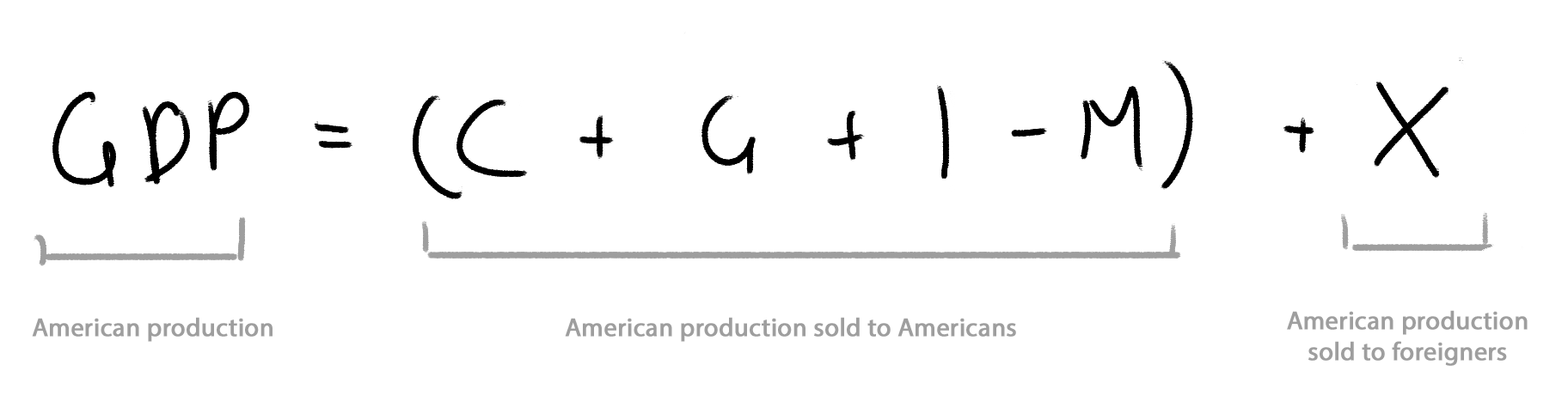
But I won't pretend that that doesn't look too complicated. Maybe even more complicated than the original equation. So, grouping the imported segments together in one neat little M makes sense.
By the way, if we add exports to the mega chart, we get a complete picture of GDP.
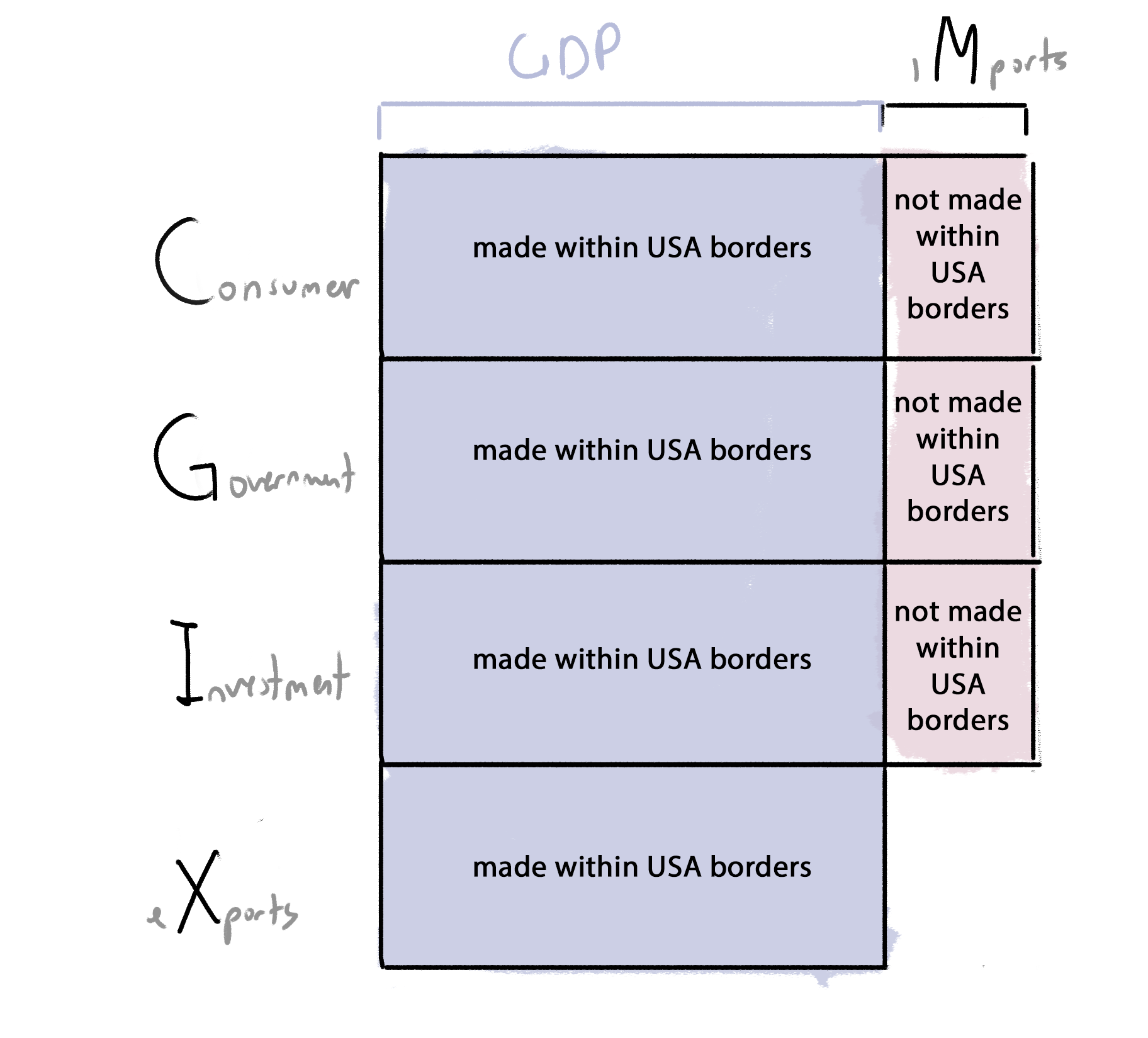
Looking at this chart, we can see why the "GDP = C + G + I - (X + M)" is a factually correct depiction of GDP.
However, factual correctness isn't the only thing to consider when choosing an equation. Notice that exports and imports don't overlap at all. This equation, by putting "exports - imports" in brackets, implies you add to the GDP the portion of exports is left after you subtract imports, when in reality, these two have no connection to each other. To make it really clear, you can even look at it this way:
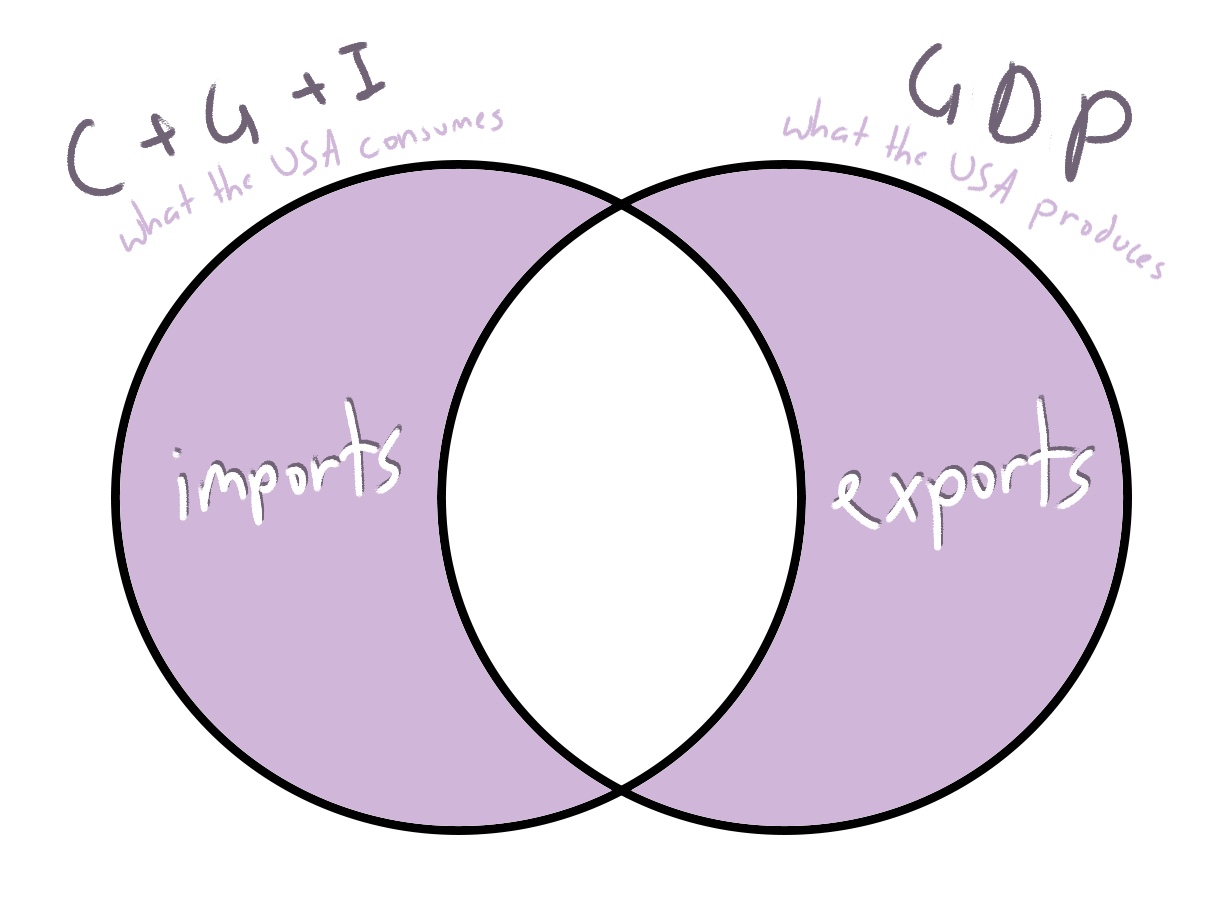
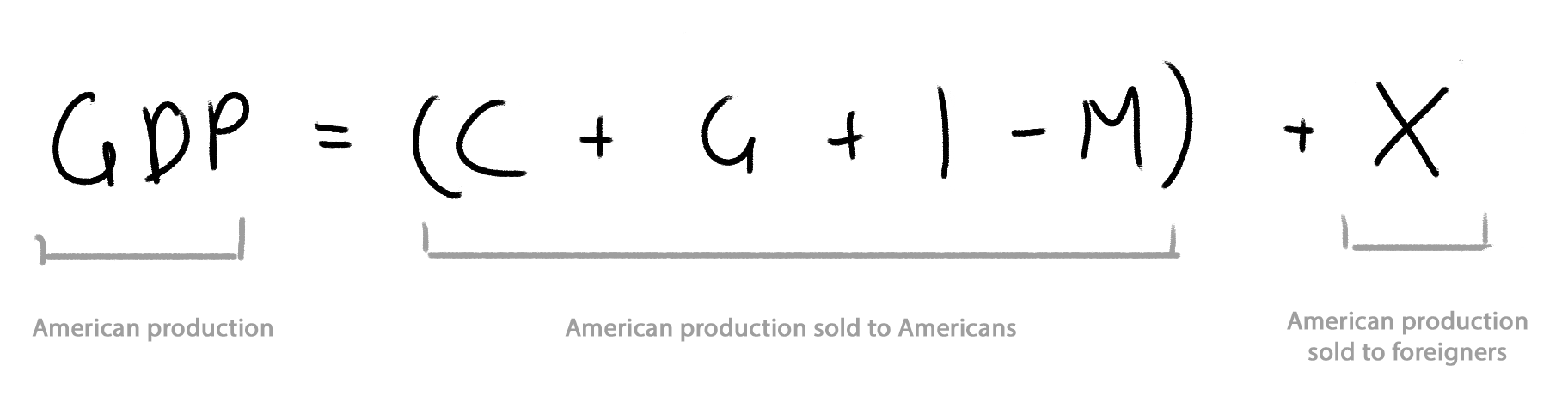
The intention behind subtracting imports is that we don't want to count what Americans buy from other countries inside the GDP. We want to remove the imports section from C + G + I, not from from exports. And so, I think it makes much more sense conceptually to write the GDP equation this way. Maybe, this will help other first-time econ learners avoid the confusion that I struggled with.
Comments (loading...)
Econ
AP Macro notes + musings